Nahmánides: El sabio de Girona que desafió a reyes y dejó huella en tres continentes

Nahmanides es una figura clave para comprender la riqueza intelectual y espiritual del judaísmo medieval. Desde el principio, su vida estuvo marcada por el estudio, el liderazgo y el coraje. Nacido en 1194 en la ciudad catalana de Girona, Moshe ben Nahmán —más conocido como Nahmánides o Ramban— fue rabino, médico, místico, filósofo y líder comunitario. Su trayectoria lo llevó de Girona y Barcelona a Jerusalén y Acre de Europa a Asia, y su legado sigue vivo en comunidades de todo el mundo.
The historical context of the Call of Girona
To understand Nahmanides's importance, it is essential to understand the environment in which he grew up. In the 12th century, the Jewish quarter of Girona, known as El Call, was one of the most important centers of Catalan Jewry. Indeed, medical treatises were written there, sacred texts were debated, and scientific works were translated. It was precisely in this environment that Nahmanides began his training in the Talmud, Torah, and medicine.
Thanks to his intellect and commitment, he soon became an authority not only locally but also recognized throughout the Jewish world of the Crown of Aragon.
Nahmanides: Medical, Mystical, and Biblical Wisdom
On the one hand, as a physician, he treated Jews and Christians without distinction, and he did so without charge, as he understood medicine as a spiritual duty. On the other hand, as a theologian and philosopher, he wrote commentaries on the Torah that are still studied in rabbinical academies today.
A diferencia de otros sabios como Maimónides, que se basaban en la lógica aristotélica, Nahmánides introdujo una dimensión mística a través de la cábala. Su pensamiento refleja, además, una sensibilidad profundamente ligada al judaísmo catalán.
He was also a poet, legislator, and community leader. However, his most decisive moment would come in 1263.

The Barcelona Dispute: Faith versus Power
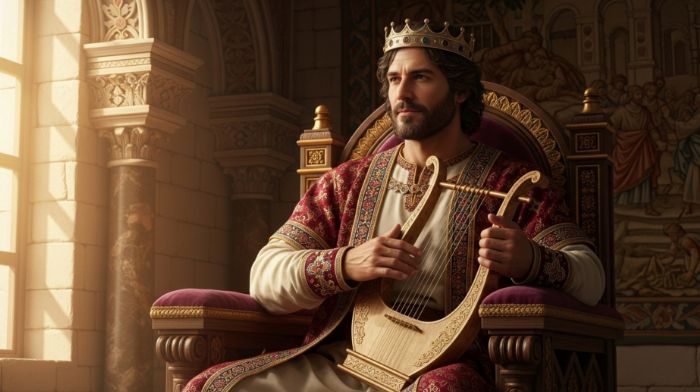
In that year, he was called to participate in the Barcelona dispute, a public debate between Nahmanides and Paul Christiani, a convert to Christianity. The event, which took place before King James I and church leaders, was intended to demonstrate the truth of Christianity based on Jewish texts.
For several days, Nahmanides calmly and brilliantly defended the Jewish position. Although the debate was clearly biased, his intervention was so solid that the king himself publicly praised him. However, his arguments were considered too uncomfortable for the ecclesiastical authorities. Consequently, his writings were censored, and he was forced into exile.
Esta disputa no solo marcó un antes y un después en su vida, sino que también demostró su integridad moral y capacidad de diálogo.
Jerusalem: Exile and Spiritual Reconstruction
Following his expulsion, Nahmanides moved to Jerusalem. Despite the deterioration of the local Jewish community, he refused to give up. On the contrary, he led its reconstruction: he organized religious life, restored synagogues, and founded a new community.
Today, the Ramban Synagogue in Jerusalem bears his name, as a testament to his lasting impact. Furthermore, his theological work was studied not only by Jews but also by thinkers from other religious traditions.
Nahmanides' legacy in Girona
Although his life ended far from his homeland, Nahmanides was always deeply linked to GironaHe not only trained there, but also experienced his first debates, medical practices, and mystical experiences.
Today, the Call of Girona preserves much of that legacy. Since the 1980s, it has been carefully restored. Museum of Jewish History It exhibits documents, ritual objects and even a mikveh (ritual bath) that allows visitors to get closer to that past.
Therefore, walking through its streets is also a journey through the history of one of the most influential sages of medieval Judaism.
More information and reservations at:
https://histary.es
More tours in HL Comedy Tours

-
 Halloween, Day of the Dead and Castanyada: how Mexico, Spain and the United Kingdom remember their deadOctober 5, 2026
-
Sustainable Tourism Trends 2026: How Self-Guided Tours Are Shaping the Future of TravelMay 29, 2026
-
Edinburgh: A complete guide to discovering the Scottish capital like a localApril 15, 2026
-
From the Iran War to Alexander the Great: The eternal conflict between East and WestMarch 17, 2026
-
Harry Potter in London: real locations where magic meets historyFebruary 26, 2026
-
Chinese New Year 2026: History, Traditions and MeaningFebruary 26, 2026
-
The Earth has been round for 2,000 years: history proves it better than the internet.January 20, 2026
-
To return or not to return? The historical dilemma of diasporas (and what the current Venezuelan one teaches us)January 9, 2026
-
Kings who died in the most absurd ways in historyDecember 29, 2025
-
The fire at the Alcázar of Madrid that changed the city forever: was Philip V to blame?November 20, 2025