Sustainable Tourism Trends 2026: How Technology and Self-Guided Tours Are Transforming Travel
Tourism is back.
In fact, global tourism has almost fully recovered to pre-pandemic levels, with international arrivals projected to reach around 1.5 billion travelers worldwide. Yet this recovery has created a new challenge for cities, heritage sites, and local communities: how do we continue welcoming visitors without damaging the very places people come to experience?
This question sits at the heart of one of the biggest travel movements of our time: sustainable tourism.
Across Europe and beyond, destinations are shifting away from simply attracting more visitors and towards managing tourism more responsibly. From Barcelona and Amsterdam to Rome and Valencia, city authorities are increasingly focused on reducing overcrowding, protecting cultural heritage, and improving the quality of life for residents.
At the same time, new technologies are creating exciting opportunities to make travel more immersive, more educational, and more sustainable.
Let’s explore the most important sustainable tourism trends shaping the future of travel.
The End of Mass Tourism as We Know It
For decades, success in tourism was measured by one metric: more visitors.
Today, that mindset is changing.
Many of the world’s most visited destinations are experiencing the effects of overtourism. Historic city centres are becoming overcrowded, housing prices are rising, infrastructure is under pressure, and local communities are increasingly pushing back against uncontrolled visitor growth.
Cities such as Amsterdam have introduced visitor caps and some of Europe’s highest tourist taxes. Barcelona has tightened regulations on short-term rentals and introduced measures to reduce pressure on the city centre. Rome is implementing new crowd-management systems at major attractions.
The message is clear:
The future of tourism is not about attracting more visitors. It is about creating better visitor experiences while protecting destinations for future generations.
Smart Tourism and Data-Driven Destination Management
One of the most significant trends in sustainable tourism is the rise of smart destination management.
Tourism boards and local governments are increasingly using:
- Real-time visitor monitoring
- Crowd-flow analysis
- Predictive analytics
- Mobile location data
- Smart tourism platforms
These technologies help destinations understand where visitors are going, when overcrowding occurs, and how tourist flows can be distributed more effectively.
Amsterdam, for example, has become a global benchmark in using real-time tourism data to forecast visitor surges and reduce congestion in busy areas. Valencia has invested in smart tourism initiatives designed to spread visitors across different neighbourhoods and attractions.
This represents a major shift from reactive tourism management to proactive destination planning.
Travelers Want Authentic Experiences, Not Crowded Checklists
Another major trend is the growing demand for authentic cultural experiences.
Modern travelers increasingly seek:
- Local stories
- Hidden landmarks
- Cultural immersion
- Educational experiences
- Meaningful connections with destinations
Instead of spending their entire trip standing in queues at overcrowded attractions, visitors are looking for ways to explore cities more deeply and independently.
Research shows that cultural tourism continues to grow globally at an estimated annual rate of 10–12%, driven by demand for high-value experiences that combine learning, culture, and exploration.
This shift creates opportunities for destinations to encourage visitors beyond traditional hotspots and into lesser-known areas that often hold equally fascinating stories.
The Rise of Self-Guided Tours
One of the fastest-growing trends in sustainable tourism is the adoption of self-guided experiences.
Unlike traditional group tours, self-guided tours allow visitors to:
- Explore at their own pace
- Avoid large tourist groups
- Visit attractions during quieter periods
- Discover alternative routes
- Spend more time in local neighbourhoods
This naturally helps distribute tourism across a wider area while providing a more personalised experience.
For cities facing overtourism challenges, self-guided routes offer an effective way to redirect visitor flows away from overcrowded landmarks and towards under-visited cultural sites.
The result is a better experience for travelers and a more balanced impact on the destination.
Augmented Reality Is Transforming Cultural Tourism
Technology is no longer just a convenience for travelers.
It is becoming a powerful tool for storytelling.
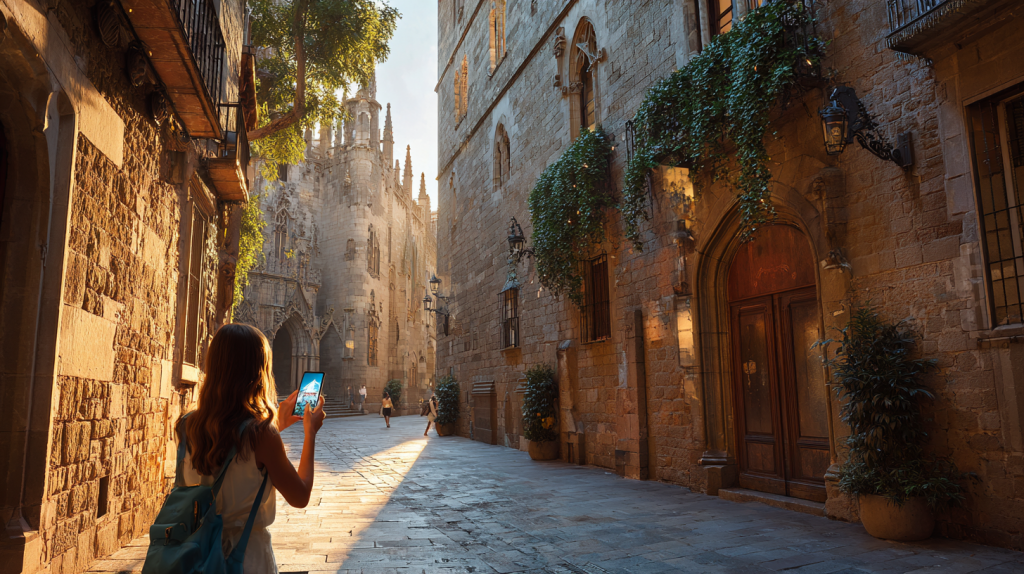
Augmented Reality (AR) is emerging as one of the most exciting innovations in cultural tourism because it allows visitors to see history come to life directly through their smartphones.
Instead of reading static information panels, travelers can:
Visualise historical buildings as they once appeared
Experience immersive reconstructions
Access interactive storytelling
Explore cultural heritage in a more engaging way
Studies increasingly show that immersive technologies can significantly improve visitor engagement, satisfaction, and learning outcomes in cultural heritage environments.
For younger generations especially, interactive experiences are becoming an expectation rather than a novelty. Research suggests that up to 80% of educational and cultural tours still rely on traditional formats, creating a significant gap between visitor expectations and current tourism offerings.
Sustainable Tourism Is About Spreading Visitors, Not Stopping Them
One common misconception is that sustainable tourism means reducing tourism.
In reality, sustainable tourism is about balance.
The goal is not to discourage travel but to distribute its benefits more evenly.
Forward-thinking destinations are increasingly promoting:
- Alternative neighbourhoods
- Secondary cultural attractions
- Off-peak travel periods
- Local businesses
- Hidden heritage sites
By encouraging visitors to explore beyond the most famous landmarks, cities can reduce pressure on overcrowded areas while generating economic benefits for a wider range of communities.
This approach creates a win-win scenario for residents, visitors, and cultural heritage institutions alike.
The Future of Sustainable Tourism
The next generation of tourism will likely combine:
- Smart destination management
- Real-time visitor insights
- Augmented reality experiences
- Self-guided cultural routes
- Data-driven sustainability strategies
Destinations that successfully integrate these elements will be better equipped to protect their heritage, improve visitor experiences, and manage tourism growth responsibly.
The future traveler will not simply visit a city.
They will experience it more deeply, more independently, and with a greater understanding of its culture and history.
visitor expectations and current tourism offerings.
Discover Sustainable Tourism with HistARy
At HistARy, we believe the future of travel is immersive, educational, and sustainable.
Our self-guided augmented reality tours allow you to explore cities at your own pace while uncovering hidden stories, historical characters, and cultural landmarks that many visitors never discover.
By encouraging travelers to move beyond overcrowded tourist hotspots and engage with local heritage in a more meaningful way, HistARy supports a more sustainable approach to urban tourism.
Whether you’re exploring medieval streets, uncovering forgotten stories, or experiencing history through augmented reality, every route is designed to help you connect with a destination on a deeper level.
Ready to experience Barcelona differently?
👉 Explore HistARy’s self-guided tours here:
Because sustainable tourism isn’t about seeing less.
It’s about discovering more.
Sources
- OECD Tourism Trends and Policies 2024
- UNWTO Tourism Barometer 2023
- GDS-Index 2024: Wave of Transformation
- World Travel & Tourism Council (WTTC) & Trip.com Technology Game Changers 2025
- HistARy Strategic Sustainability Report, Queen’s University Belfast
- HistARy Strategic Mentoring Report: The Experience Gap in Cultural Tourism
-
 Halloween, Día de Muertos y Castanyada: cómo recuerdan a sus muertos México, España y Reino Unido05 Oct 2026
 -
Sustainable Tourism Trends 2026: How Self-Guided Tours Are Shaping the Future of Travel29 May 2026
-
Edimburgo: guía completa para descubrir la capital escocesa como un local15 Abr 2026
-
De la guerra de Irán a Alejandro Magno: el conflicto eterno entre Oriente y Occidente17 Mar 2026
-
Harry Potter en Londres: localizaciones reales donde la magia se encuentra con la historia26 Feb 2026
-
Año Nuevo Chino 2026: historia, tradiciones y significado26 Feb 2026
-
La Tierra es redonda desde hace 2.000 años: la historia lo demuestra mejor que Internet20 Ene 2026
-
¿Volver o no volver? El dilema histórico de las diásporas (y lo que nos enseña la actual venezolana)09 Ene 2026
-
Reyes que murieron de las formas más absurdas de la historia29 Dic 2025
-
El incendio del Alcázar de Madrid: cambió la ciudad para siempre: ¿Fue Felipe V el culpable?20 Nov 2025