Harry Potter in London: real locations where magic meets history
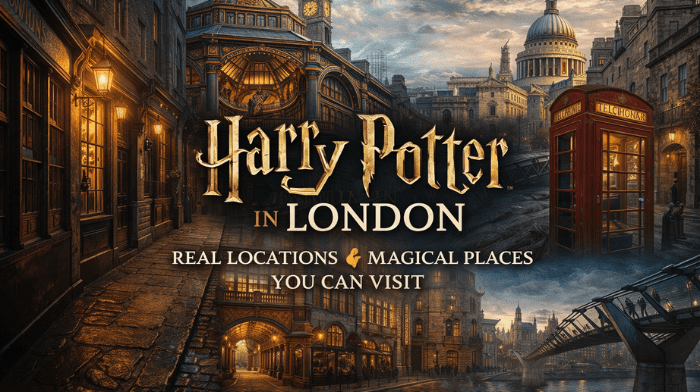
If you're a fan of Harry Potter And if you visit London, there's something you should know: you don't need a Hogwarts letter to experience the magic.
Firstly, the city is full of real locations that inspired the universe created by JK Rowling and that later appeared in the films. From hidden streets to historic markets, Every corner, steeped in history, contributes to creating an atmosphere that seems to have come straight from the magical world.
However, many of these places are not simply film sets. They are authentic spaces, steeped in centuries of history, where the fiction and reality They cross paths constantly.
In this guide you will discover:
• The main ones Harry Potter locations in London:
• Historical places that inspired the magical world
• How to explore the city beyond the movies
• Why London was already magical before the movies
How to explore magical London in real life?
Beyond the special effects, the true charm of Harry Potter in London It resides in its history. The city preserves medieval alleyways, Georgian architecture and spaces that have barely changed over the centuries.
Therefore, walking through these places allows one to understand how the imagination of JK Rowling It relied on a city that already possessed, in itself, a character mysterious and narrative.
Goodwin's Court: the inspiration for Diagon Alley
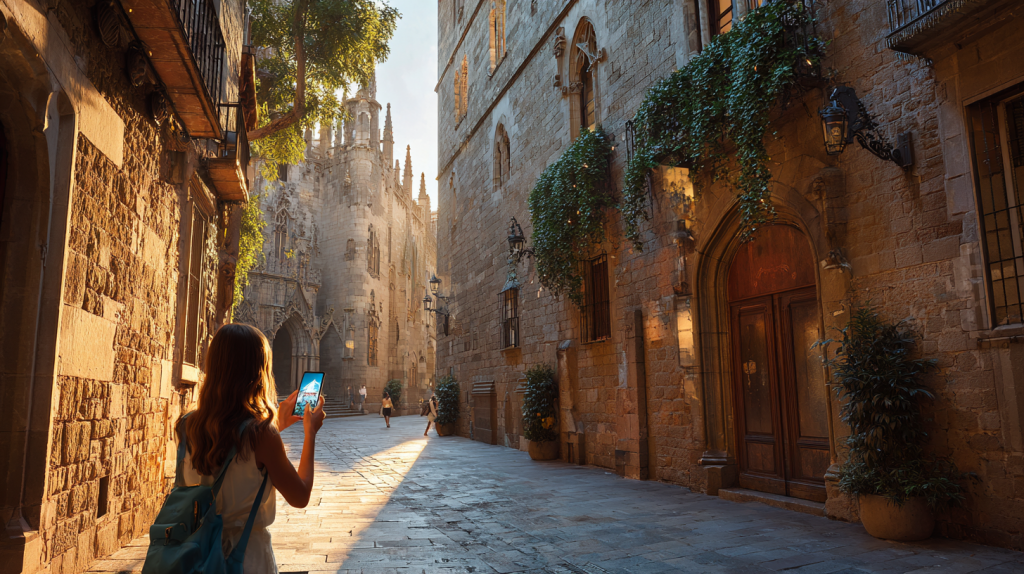
Hidden away near Covent Garden, Goodwin's Court It is one of the most atmospheric streets in London and one of the places that many consider a possible inspiration for Diagon Alley. Its narrowness, its dim lighting and its almost untouched aesthetic immediately evoke a magical universe.
Among its most representative characteristics are:
Narrow cobblestones
Leaning buildings from the 18th century
Old lanterns
Dark facades with traditional shops
Unlike a simple movie set, this alleyway retains its original architecture and an authenticity rarely found in the heart of the city. This historical authenticity creates an immersive feeling, as if the visitor had discreetly crossed the border into a secret market from a magical world.
Here we understand something essential: the magic works because the place was already extraordinary long before cinema.
Leadenhall Market and the entrance to the Leaky Cauldron
He Leadenhall Market, located in the City of London, was used as a location to represent the entrance to Leaky Cauldron in Harry Potter and the Philosopher's Stone. Its historic atmosphere and distinctive architecture make it one of the most recognizable real-life locations in the cinematic universe.
This market is notable for:
Its ornate Victorian structure
Neo-Gothic arches and colorful roofs
A trading tradition that dates back to the 14th century
During the Middle Ages, it was one of London's most important markets and a key hub for the city's trade. Today, it demonstrates how an authentic historical space can be transformed into a fantastical setting without losing its identity or original character.
Great Scotland Yard and the Ministry of Magic
The scenes related to the Ministry of Magic They were filmed near Great Scotland Yard, a street deeply linked to the police and political history of London. Its institutional environment and its sober architecture reinforce the sense of power and secrecy that characterizes the magical universe.
This place:
It was the original headquarters of the Metropolitan Police
It is linked to Victorian investigations and espionage cases.
It is located next to the main centers of power of Westminster
The choice was not accidental. The magical universe works precisely because it seems to coexist, almost hidden, within real London. Here, fiction does not replace history: it builds upon it.
Millennium Bridge: When Magic Invades Modern London
He Millennium Bridge appears in Harry Potter and the Half-Blood Prince, In the scene where the Death Eaters destroy the bridge in the heart of London, the sequence reinforces the idea that the magical world can unexpectedly intrude into everyday life.
In reality, this pedestrian bridge, inaugurated in 2000, connects the St. Paul's Cathedral with the Tate Modern It offers one of the most iconic views of the London skyline. Its contemporary design symbolizes modern, dynamic London.
Thus, it represents the encounter between contemporary London and fantasy narrative, demonstrating that even the most recent spaces can be naturally integrated into a magical story.
King's Cross and Platform 9¾
No route of Harry Potter in London would be complete without a visit to King's Cross Station.
Currently you will find:
The famous trolley going through the wall of platform 9¾
An official themed store
One of the most visited photo spots in London
Although it's now a clearly tourist destination, it remains one of the most recognizable symbols of the link between fiction and reality. Here, more than anywhere else, the boundary between the two worlds seems to blur.
Why London was already magical before Harry Potter
JK Rowling didn't create the magical atmosphere of London; she amplified it.
Long before the movies, the city already had:
Medieval alleyways
Gothic architecture
Underground tunnels
Royal political intrigues
Centuries of urban transformation
The magical world works because it's superimposed on a city that was already mysterious by nature. London didn't need magic to be fascinating; magic simply found the perfect setting there.
Don't just visit the sites: understand the history
Many tours focus solely on cinematic curiosities. However, what is truly revealing is understanding the historical context that gives depth to these places.
Goodwin's Court It is not only fascinating because of its possible link to Harry Potter, but because it has survived centuries of London history.
Leadenhall Market It is impressive not only because it appears in a film, but because merchants worked there long before the existence of cinema.
When we understand the stories behind every corner, magic ceases to be fiction and becomes experience.
Explore London with Histary
If you want to go beyond film locations, in History We explore London through immersive experiences that combine storytelling, history, and urban exploration.
Our tours reveal:
Hidden medieval streets
Real political scandals
Historical conspiracies
Stories that transformed the city
Discover our tours in London here
Because in London, history has always been as fascinating as magic.
-
 Sustainable Tourism Trends 2026: How Self-Guided Tours Are Shaping the Future of TravelMay 29, 2026
 -
Edinburgh: A complete guide to discovering the Scottish capital like a localApril 15, 2026
-
From the Iran War to Alexander the Great: The eternal conflict between East and WestMarch 17, 2026
-
Harry Potter in London: real locations where magic meets historyFebruary 26, 2026
-
Chinese New Year 2026: History, Traditions and MeaningFebruary 26, 2026
-
The Earth has been round for 2,000 years: history proves it better than the internet.January 20, 2026
-
To return or not to return? The historical dilemma of diasporas (and what the current Venezuelan one teaches us)January 9, 2026
-
Kings who died in the most absurd ways in historyDecember 29, 2025
-
The fire at the Alcázar of Madrid: it changed the city forever: Was Philip V to blame?November 20, 2025
-
Argentina: from world power to economic meme (and back again)November 12, 2025