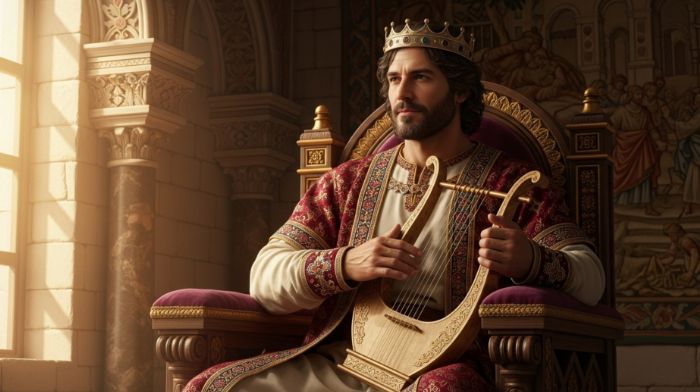
Spain in Shakespeare's universe: more than a Castilian accent
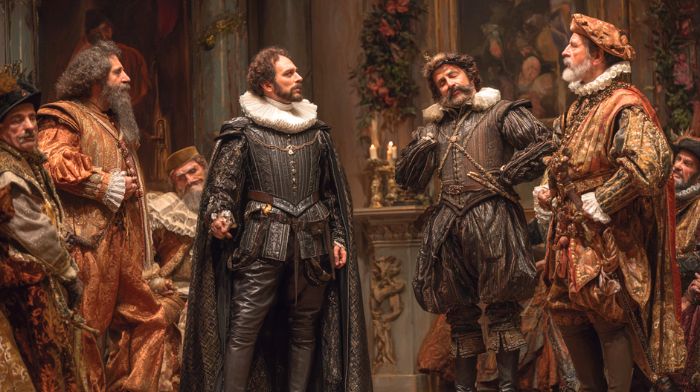
What does Spain have to do with Shakespeare's universe?
When we think about Spain in Shakespeare's universeIt's easy to imagine that he doesn't have much of a role to play. After all, the Bard of Avon tells us about melancholic Danish kings, passionate Italian lovers, and enchanted forests populated by fairies. But what about Spain?
Did it have a place in Shakespeare's universe? Do our lands, our characters, or even our reputations appear in his works?
The short answer: yes.
The long answer: yes, but in more subtle, symbolic, or even comical ways than you might expect.
In this article, we explore how it sneaks in Spain in Shakespeare's universe, from exotic accents to imperial references, theatrical caricatures and unexpected literary connections.
"Spanish" as an exotic accent or comic relief
In several of his plays, Shakespeare uses foreign language as a comic element. Thus, accents, foreign words, and linguistic confusions become theatrical devices. In this context, Spain in Shakespeare's universe It appears as a touch of exoticism, arrogance or pedantry.
A clear example can be found in The Merry Wives of Windsor (circa 1597). In this comedy appears Doctor Caius, a French physician whose manner of speaking is a constant source of jokes. In one scene, the Garter Innkeeper mocks him with a barrage of nonsensical nicknames:
«Thou art a Castalion-King-Urinal!»
Many editors read "Castalion" as "Castilian." That is, to be funny, they call the French doctor Spanish. And in late 16th-century England, with the Spanish Armada still fresh in everyone's minds, that didn't exactly sound like a compliment.
This type of joke shows how Spanish was used on stage as a synonym for foreigner… and for ridiculous.
Symbolic mentions: Castile and the imperial reputation
In Shakespeare's time, Spain was a superpowerUnder the Austrians, the Spanish Empire dominated much of Europe, America, and Asia. Its influence (and arrogance) did not go unnoticed.
Therefore, mentioning Castile or the Spanish in an English work was not neutral: it evoked power, wealth, pomp... and sometimes, arrogance.
In Much Ado About Nothing (circa 1598), Spain is present from the cast: Don Pedro is the Prince of Aragon, and the action takes place in Messina, in Sicily, which for centuries belonged to the Crown of Aragon. In one scene, Don Pedro himself laughs at Benedick, who, since falling in love, dresses in foreign fashions.
«…a German from the waist downward, all slops, and a Spaniard from the hip upward, no doublet.»
«"...German from the waist down, all baggy breeches, and Spanish from the hips up, without a doublet.".
Here, Spanishness appears as a showy and somewhat pretentious fashion: precisely the image that many English people had of the Spanish, courteous, but also conceited and excessively formal.
Another example of how Spain in Shakespeare's universe appears as a symbol of power… and ego.
Spaniards as symbolic antagonists: the shadow of the Empire
Although Shakespeare avoids direct references to the war between England and Spain (including the Spanish Armada of 1588), the political climate of the time subtly filters into his plays.
In Henry VFor example, there is a constant rivalry between languages and cultures: English, French, Latin... Spanish is not mentioned directly, but the tension between Catholic and Protestant European monarchies lies in the background.
Many scholars believe that characters such as Don Adriano de Armado in Love's Labour's Lost They are caricatures of the Spanish nobleman, with his grandiloquent way of speaking and his exaggerated romanticism.
From the very first scene, the King of Navarre introduces him as "a refined traveller of Spain," a man who has a veritable factory of phrases in his head. And Berowne adds: "a man of fire-new words." His way of speaking is bombastic, full of convoluted terms and interminable sentences to say simple things. It is, probably, the clearest and most ridiculous Spanish in the entire Shakespearean canon.
A figure that represents how Spain in Shakespeare's universe It can be both an object of ridicule and an object of fascination.
And what about Don Quixote?
Shakespeare and Cervantes died almost simultaneously, in 1616, and there is no record of them ever having met. Even so, a curious connection exists between them. The first part of Don Quixote was translated into English in 1612, and in 1613, Shakespeare's company, the King's Men, performed The History of Cardenio at court, based on one of his minor stories: that of Cardenio and Luscinda. A record from 1653 attributes the play to John Fletcher and William Shakespeare.
Unfortunately, the original text has been lost. In 1727, Lewis Theobald published Double Falsehood and claimed it was based on manuscripts of that work, although its authenticity is still debated. In any case, names like Cardenio and Luscinda demonstrate that Spanish literature was indeed on the radar of English theater at the time, even during the reign of James I.
Although brief and fragmentary, this link demonstrates that Spain in Shakespeare's universe It was not only a political or cultural reference, but also a literary one.
A Spain that Shakespeare never visited, but knew well
Although William Shakespeare never left England (as far as we know), his work is full of references to countries he never set foot in: Italy, France, Greece, Egypt... and also, occasionally, Spain.
His knowledge of Spanish geography was limited—like that of many English people of his time—but that did not stop him from using it as a symbol of something powerful, exotic, or excessive.
In a way, Spain in Shakespeare's universe It was like a mirror in which the English projected both admiration and rivalry.
The Spanish in the Elizabethan Imagination
In Shakespeare's plays, Spain appears as a rumor: sometimes pompous, sometimes romantic, sometimes ridiculous. But always recognizable.
There are no great Spanish characters in his tragedies, nor are there extensive references to real battles between nations. But there is an accent, a symbolic presence, and a constant cultural nod to that powerful nation that, in the Bard's day, was the eternal rival... and the source of countless theatrical fantasies.
What do scholars say?
Researchers such as Stephen Greenblatt, James Shapiro and Jonathan Bate They have analyzed how the political and cultural context of Elizabethan England influenced Shakespeare's work. And although Spain doesn't occupy a central place, its presence is constant in the background.
From the fear of the Inquisition to the fascination with American gold, Spain in Shakespeare's universe It is a shadow that is projected over many scenes, although it is not always explicitly named.
And how do we explore it in HistARy?
In History, we love to discover these hidden corners of history. That's why, on our self-guided tours through London, we take you to the places where Shakespeare lived, wrote and dreamed… including echoes of Spain in its theatrical universe.
From the Globe Theatre to the alleys where the Spanish Armada was discussed, every step is an opportunity to understand how theater reflects the politics, culture, and tensions of its time.
Want to discover more about Shakespeare?
Download your tour now at histary.es, with the quality guarantee of HL Comedy Tour.
Explore the past with future technology.
-
 Halloween, Day of the Dead and Castanyada: how Mexico, Spain and the United Kingdom remember their deadOctober 5, 2026
 -
Sustainable Tourism Trends 2026: How Self-Guided Tours Are Shaping the Future of TravelMay 29, 2026
-
Edinburgh: A complete guide to discovering the Scottish capital like a localApril 15, 2026
-
From the Iran War to Alexander the Great: The eternal conflict between East and WestMarch 17, 2026
-
Harry Potter in London: real locations where magic meets historyFebruary 26, 2026
-
Chinese New Year 2026: History, Traditions and MeaningFebruary 26, 2026
-
The Earth has been round for 2,000 years: history proves it better than the internet.January 20, 2026
-
To return or not to return? The historical dilemma of diasporas (and what the current Venezuelan one teaches us)January 9, 2026
-
Kings who died in the most absurd ways in historyDecember 29, 2025
-
The fire at the Alcázar of Madrid: it changed the city forever: Was Philip V to blame?November 20, 2025