Chinese New Year 2026: History, Meaning and Power of the Fire Horse
A celebration that combines history, myth and calendar
He Chinese New Year, The Spring Festival, also known as the Feast of the Dead, is the most important celebration in the traditional Chinese calendar and one of the oldest cultural festivals in the world. With over four thousand years of history, this celebration combines agricultural rituals, mythology, astronomy, and family traditions that have survived dynasties, migrations, and social transformations.
In 2026, the Chinese New Year It begins on February 17th and inaugurates the Year of the Fire Horse, This combination only repeats every sixty years within the Chinese zodiac cycle. This moment is not just a calendar change: it symbolizes renewal, motion and transformation.
Historical origin of the Chinese New Year
The earliest records of this festival date back to the Shang Dynasty (1600–1046 BC), when ceremonies were held to thank the gods and ancestors for the end of the agricultural cycle and to ask for prosperity in the next. Over time, these practices became integrated into the political and social life of the Chinese empire.
One of the best-known legends is that of Nian monster, According to tradition, this creature appeared every New Year's Eve to terrorize the villages. The inhabitants discovered that the creature feared the color red, fire, and noise. From this arose customs that are still present today: fireworks, red envelopes, and the dragon and lion dances.
The Calendar
The calendar that marks this celebration is lunisolar. The date of the New Year varies each year, falling between the end of January and the middle of February, as it is determined by the second new moon after the winter solstice. This relationship between heaven, agriculture, and political power was key to organizing life in imperial China.
How the calendar works and why it changes every year
The traditional Chinese calendar combines the lunar cycles with the position of the sun. Each month begins with the new moon, and the year is further divided into 24 solar terms that mark the agricultural seasons. Thanks to this system, the celebration of the New Year maintains its connection with the renewal of nature.
The festivities last fifteen days and culminate with the Lantern Festival. During this period, the following takes place: chunyun, considered the largest annual migratory movement on the planet: millions of people travel to reunite with their families and celebrate together the beginning of the new cycle.
2026: The meaning of the Year of the Fire Horse
He Horse It is the seventh sign of the Chinese zodiac and symbolizes energy, movement, independence, and vitality. In traditional culture, it is associated with perseverance, nobility, and freedom. Historically, the horse It was essential on trade and military routes, which reinforced its symbolic value.
In 2026, this animal combines with the element of Fire. Within the Chinese sexagenary cycle, this union is considered especially intense: fire enhances the qualities of the horse and is associated with action, transformation, leadership, and rapid change. The last time this combination occurred was in 1966.
The Year of the Fire Horse
For many cultural interpretations, the Year of the Fire Horse It is linked to dynamic periods, courageous decisions, and collective movements. Beyond astrology, it functions as a metaphor for renewal and progress.
Traditions and symbols of the Chinese New Year
During the celebrations, cities and homes are filled with red, a color that symbolizes good fortune and protection from evil spirits. Before the start of the year, families clean their houses to "sweep away" accumulated bad luck and make way for good fortune.
Red envelopes filled with money are given to children and young people as a symbol of prosperity. At the table, food has specific meanings: fish represents abundance, dumplings wealth, long noodles longevity, and rice cake growth and progress.
The dances of the dragon and the lion
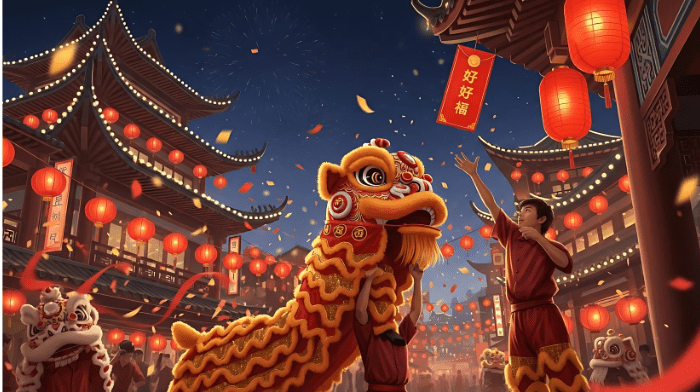
The dances of dragon and from lion, Accompanied by drums and firecrackers, these rituals are intended to attract good luck and strengthen community spirit. These traditions, which originated centuries ago, remain alive both in China and in Chinese communities around the world.
A global celebration
Today, Chinese New Year is celebrated in cities across all continents. In Europe, neighborhoods and districts with large Chinese communities organize parades, food fairs, and cultural events. Madrid and Barcelona, For example, they have become prominent settings where tradition and urban life blend during this time of year.
London, New York, Singapore, and Vancouver also celebrate Spring Festival with massive events that reflect the global reach of this holiday. More than just a national celebration, it has become an international cultural phenomenon that connects communities through shared history.
Why it remains relevant today
He Chinese New Year It remains incredibly relevant because it combines mythology, calendar, family, and cultural identity into a single celebration. It maintains rituals thousands of years old that adapt to contemporary, urban societies. Furthermore, it serves as a bridge between past and present: every symbol, every gesture, and every tradition contains layers of history.
In 2026, the Year of the Fire Horse It reminds us of the importance of cycles, movement, and renewal. A celebration that has survived empires, migrations, and technological transformations to become a global cultural heritage.
Experience the Chinese New Year with HistARy
The best way to understand a celebration like the Chinese New Year It's not just about reading about it, but about experiencing history in the streets where cultures meet. In cities like Barcelona You find entire neighborhoods with scenarios where tradition, migration and identity intersect in real time.
In History We believe history is best understood by experiencing it firsthand. Our tours connect the past with the present, explaining the cultural context of the celebrations, the communities that keep them alive, and the historical significance that often goes unnoticed.
History
If this Year of the Fire Horse 2026 If you want to discover how traditions travel, evolve and integrate into European cities, we invite you to do it with us.
Book your HistARy experience and discover history in motion:
https://histary.es
-
 Halloween, Day of the Dead and Castanyada: how Mexico, Spain and the United Kingdom remember their deadOctober 5, 2026
 -
Sustainable Tourism Trends 2026: How Self-Guided Tours Are Shaping the Future of TravelMay 29, 2026
-
Edinburgh: A complete guide to discovering the Scottish capital like a localApril 15, 2026
-
From the Iran War to Alexander the Great: The eternal conflict between East and WestMarch 17, 2026
-
Harry Potter in London: real locations where magic meets historyFebruary 26, 2026
-
Chinese New Year 2026: History, Traditions and MeaningFebruary 26, 2026
-
The Earth has been round for 2,000 years: history proves it better than the internet.January 20, 2026
-
To return or not to return? The historical dilemma of diasporas (and what the current Venezuelan one teaches us)January 9, 2026
-
Kings who died in the most absurd ways in historyDecember 29, 2025
-
The fire at the Alcázar of Madrid: it changed the city forever: Was Philip V to blame?November 20, 2025