To return or not to return? The historical dilemma of diasporas (and what the current Venezuelan one teaches us)
To return or not to return? The historical dilemma of diasporas (and what the current Venezuelan one teaches us)
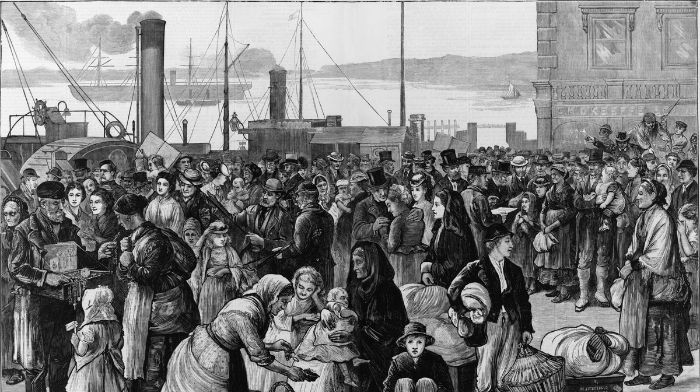
To return or not to return? The historical dilemma of diasporas
He historical dilemma of diasporas It's not a new issue, but today it's back at the center of the debate. Since January 2016, following the capture of President Nicolás Maduro, millions of Venezuelans in Spain and around the world have been celebrating the end of an era marked by one of the largest contemporary exoduses: more than 8 million people have left their country since 2014.
The joy and hope of return are evident, but a question arises that has accompanied migrant communities for centuries: To return or not to return home when the country changes?
This dilemma, which Venezuelans face today, has been shared by other historical diasporas with results as diverse as they are surprising. Let's analyze some cases to better understand the present.
What is a diaspora?
The term diaspora It describes a group of people dispersed from their homeland, usually due to causes such as wars, persecution, or economic crises. These communities maintain a cultural identity and a collective memory that connects them to their origins.
But what is most interesting is that a diaspora does not only look to the past: it also projects its future, wondering if one day it will be possible—or even desirable—to return home.
The Jewish diaspora: the longest return in history
One of the most emblematic examples of historical dilemma of diasporas This is the Jewish case. After the fall of Jerusalem and the destruction of the Temple in 70 CE, Jewish communities dispersed throughout Europe, Africa, and Asia, maintaining for centuries the hope of returning to their ancestral land.
The modern return
After World War II and the Holocaust, the creation of the State of Israel in 1948 marked the beginning of a great wave of return (aliyahHowever, this return was not a simple return to the past:
- The land found was not the one idealized in religious traditions.
- Tensions arose between Jews from different diasporas (Europeans, Africans, Asians).
- Rebuilding the imagined home became a complex and transformative task.
Historical lesson: Even when a return is possible, rebuilding the dream home involves cultural, social, and political challenges.
Other diasporas and their dilemmas
The African diaspora after slavery
Millions of Africans were brought to the Americas during centuries of slavery. After abolition, was returning to Africa an option? For many, no: the generations born in the Americas had forged new identities. The return, though symbolic, became more of a cultural than a physical movement.
The Armenian diaspora
Following the Armenian Genocide in 1915, thousands fled to Europe and the Americas. Although Armenia regained its independence in 1991, a mass return never materialized. The roots forged in the diaspora proved stronger than nostalgia.
The Venezuelan diaspora: what does the present teach us?
Today, the Venezuelan diaspora He faces the same historical dilemma: to return or not to return?
- Emotional factors: the hope of rebuilding the country.
- Practical factors: employment, security, quality of life.
- Cultural factors: How to reintegrate after years away?
History teaches us that returning is not automatic. It depends on real conditions and the ability to envision a better future in one's country of origin.
Conclusion: What can we learn?
He historical dilemma of diasporas It reminds us that migration is not just about moving physically, but also about rebuilding identities. Returning can be a dream, but also a challenge full of uncertainty.
And you? Would you dare to return if your country changed?
Discover more stories like this on our self-guided tour!
-
 Halloween, Day of the Dead and Castanyada: how Mexico, Spain and the United Kingdom remember their deadOctober 5, 2026
 -
Sustainable Tourism Trends 2026: How Self-Guided Tours Are Shaping the Future of TravelMay 29, 2026
-
Edinburgh: A complete guide to discovering the Scottish capital like a localApril 15, 2026
-
From the Iran War to Alexander the Great: The eternal conflict between East and WestMarch 17, 2026
-
Harry Potter in London: real locations where magic meets historyFebruary 26, 2026
-
Chinese New Year 2026: History, Traditions and MeaningFebruary 26, 2026
-
The Earth has been round for 2,000 years: history proves it better than the internet.January 20, 2026
-
To return or not to return? The historical dilemma of diasporas (and what the current Venezuelan one teaches us)January 9, 2026
-
Kings who died in the most absurd ways in historyDecember 29, 2025
-
The fire at the Alcázar of Madrid: it changed the city forever: Was Philip V to blame?November 20, 2025